
Last updated September 10, 2026
Level 1 sweep and inspection to the NFPA 211 annual standard - flue, crown, cap, and flashing checked and photographed
Chimney sweep logs do not sweep chimneys. They loosen some creosote - which then falls where a brush and vacuum still have to collect it.
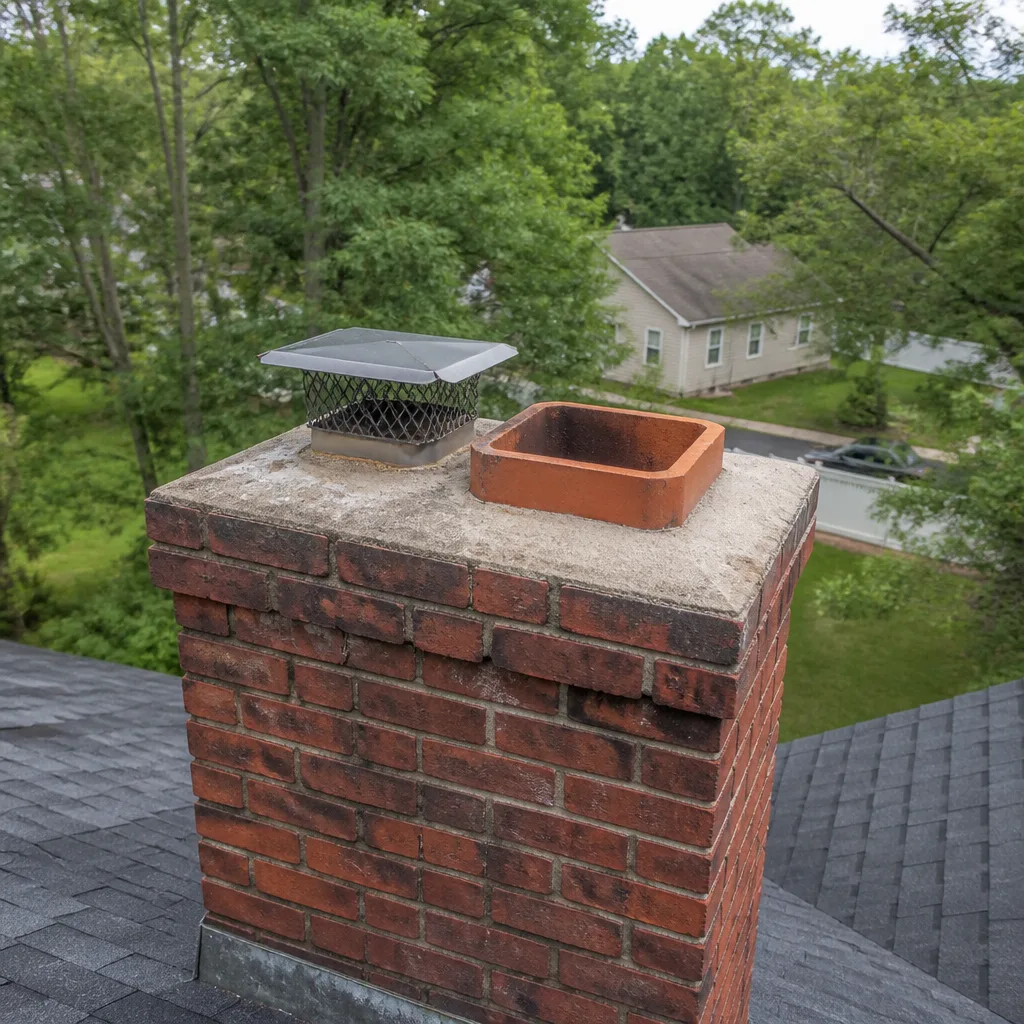
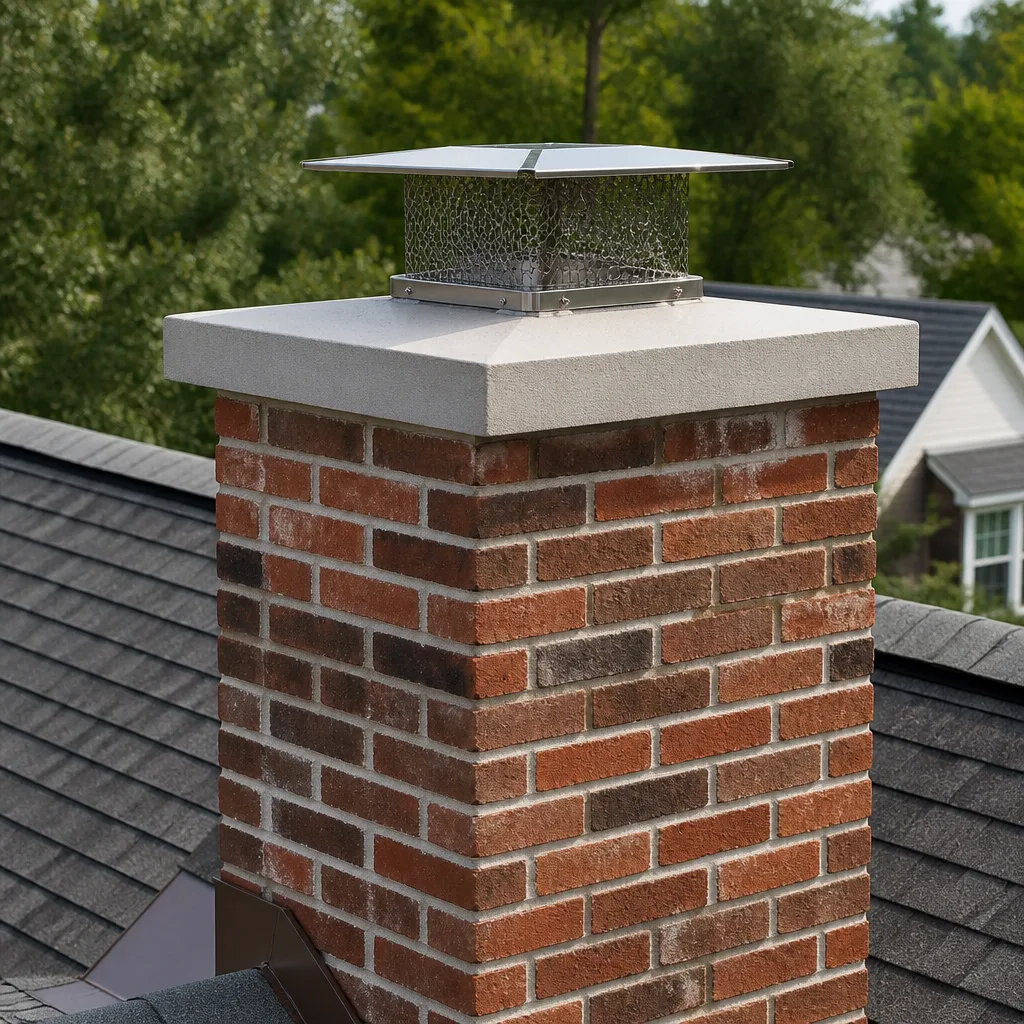
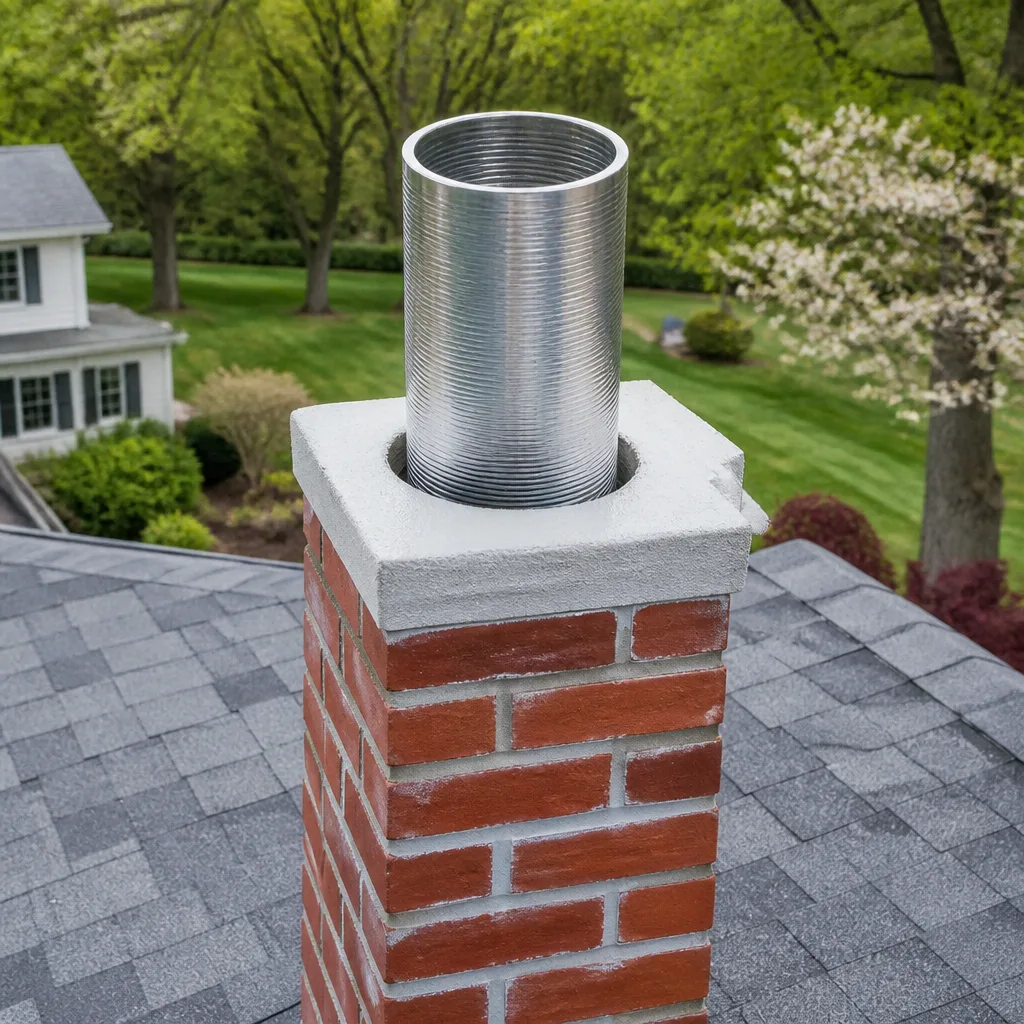
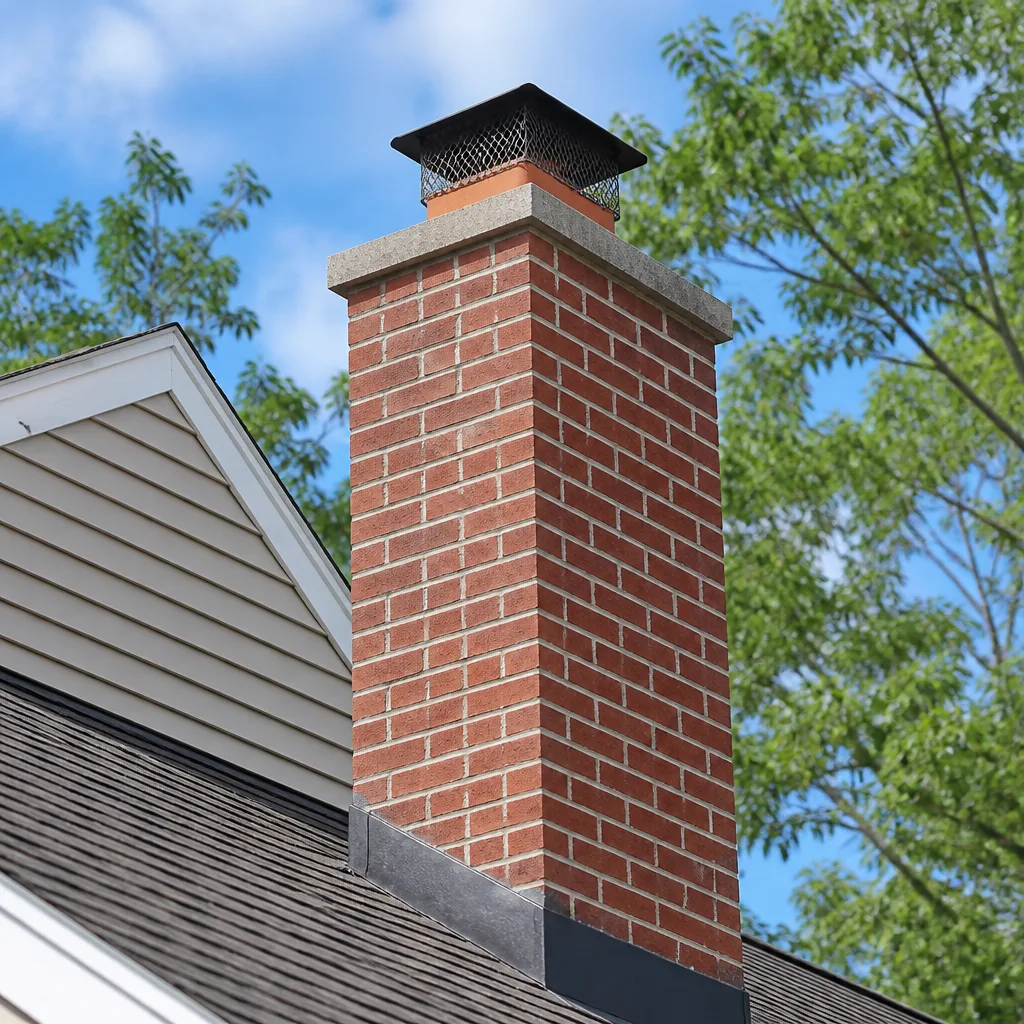
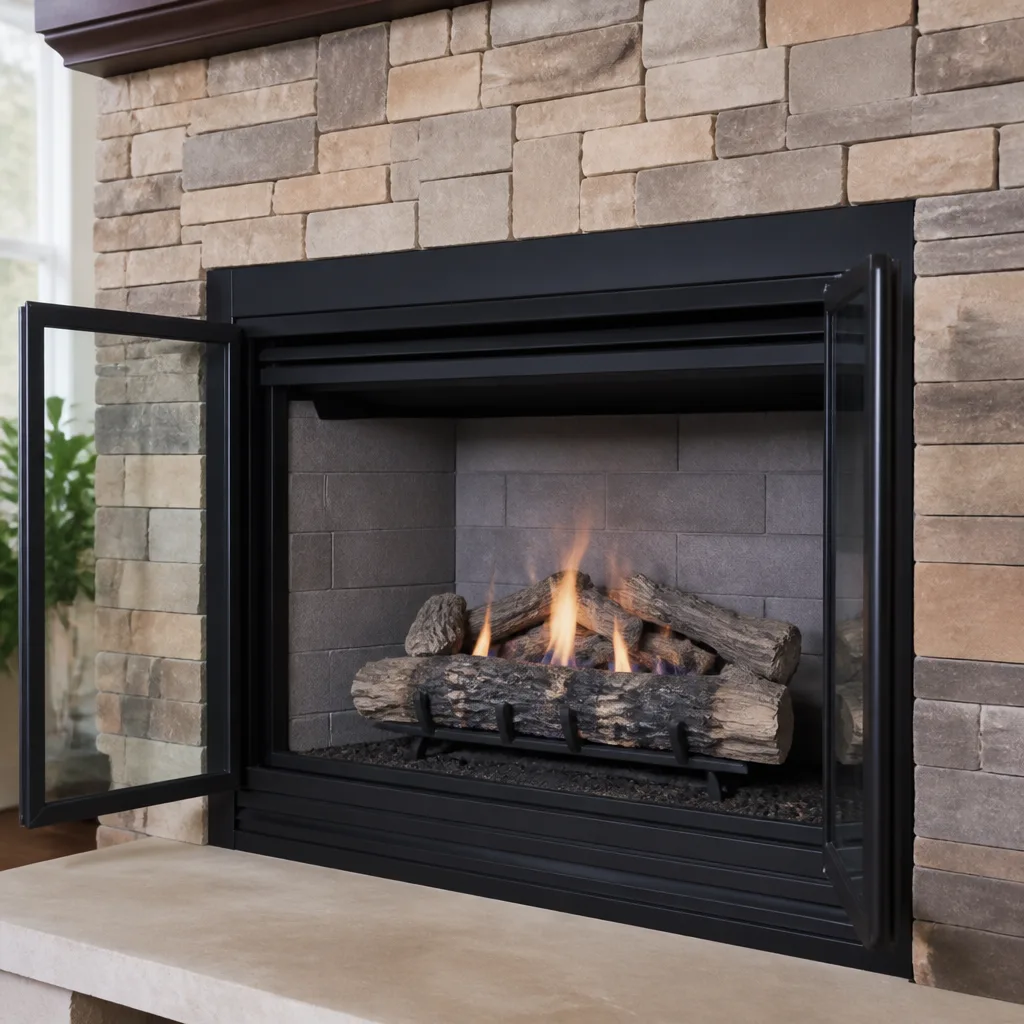
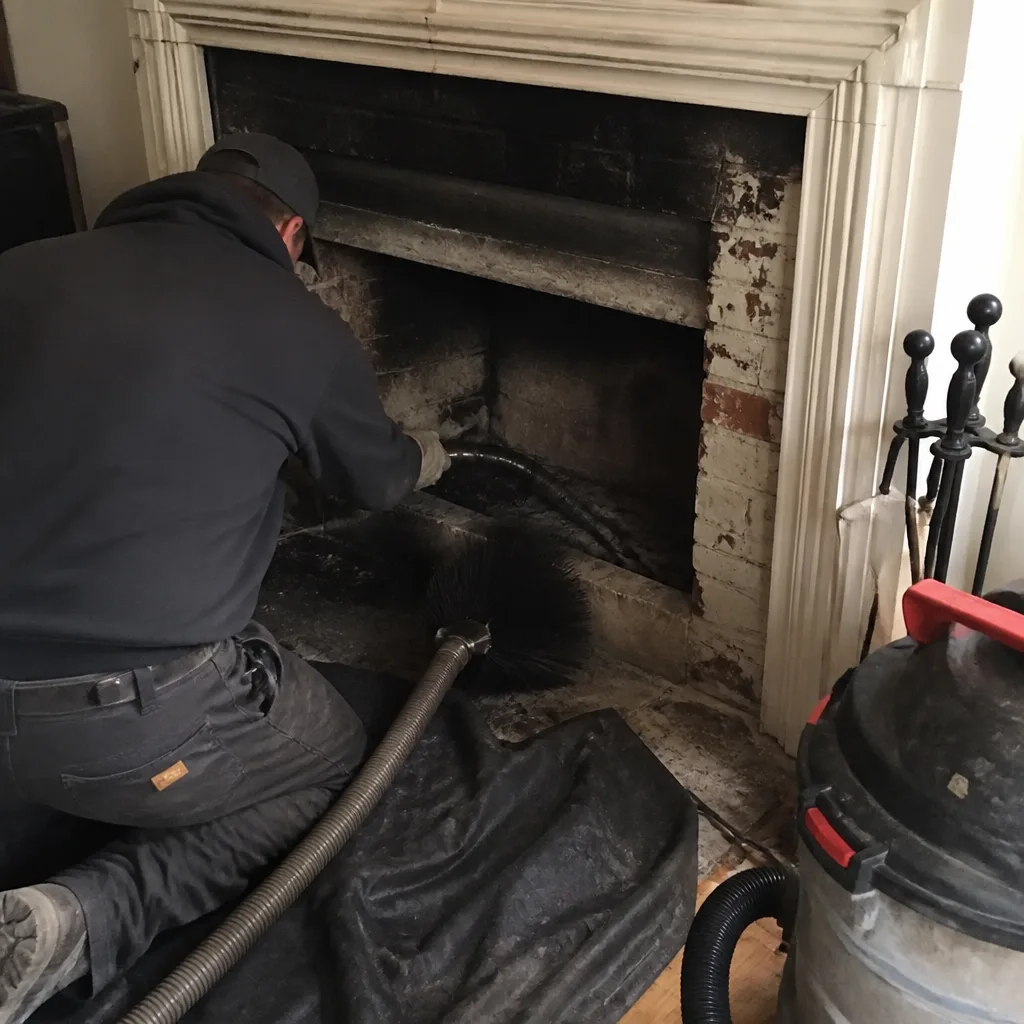 Before
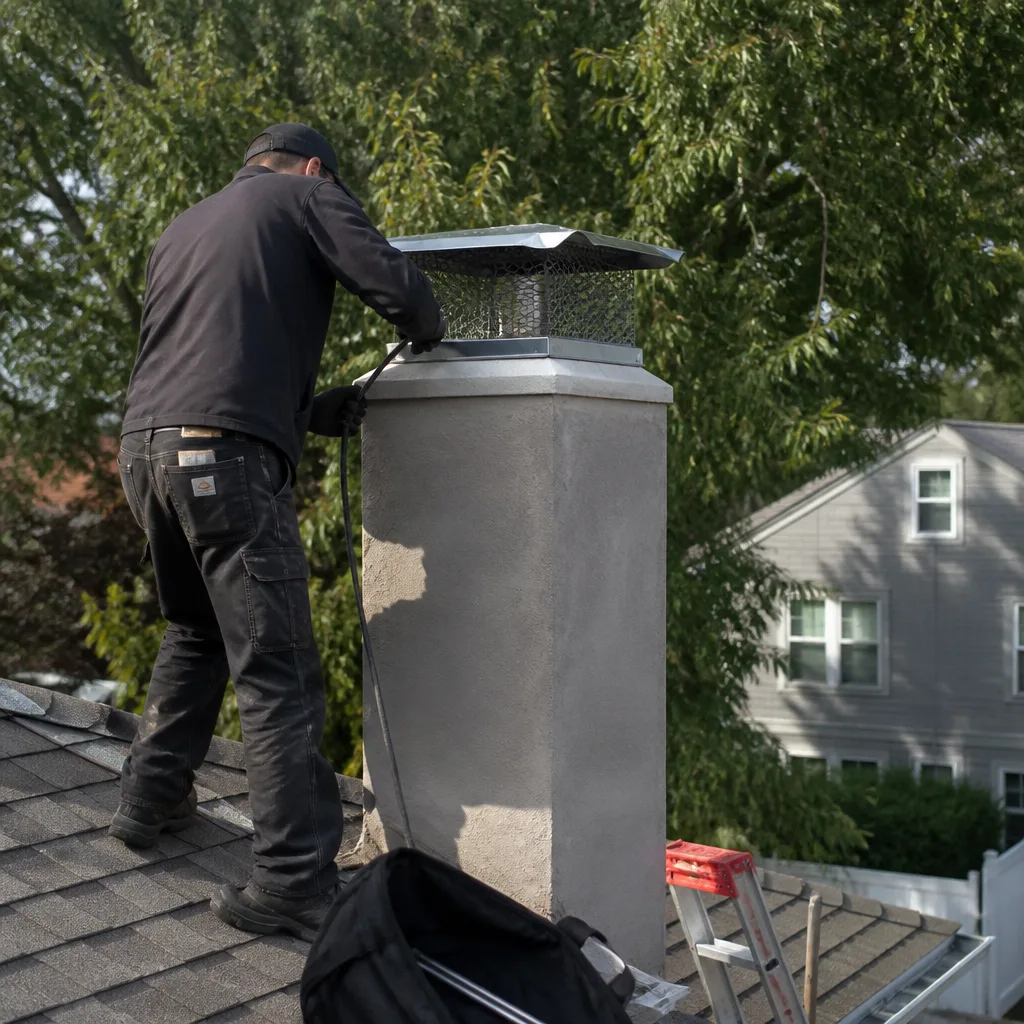 After
After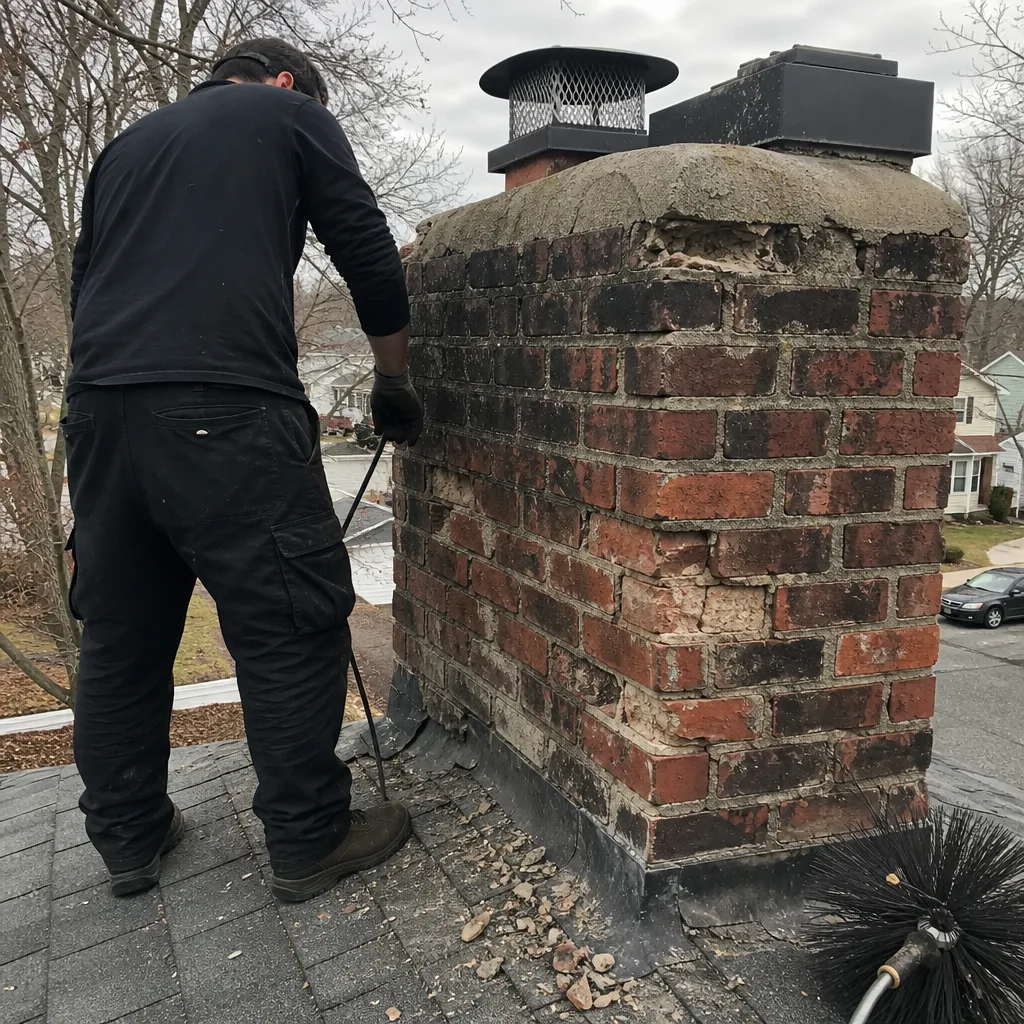 Before
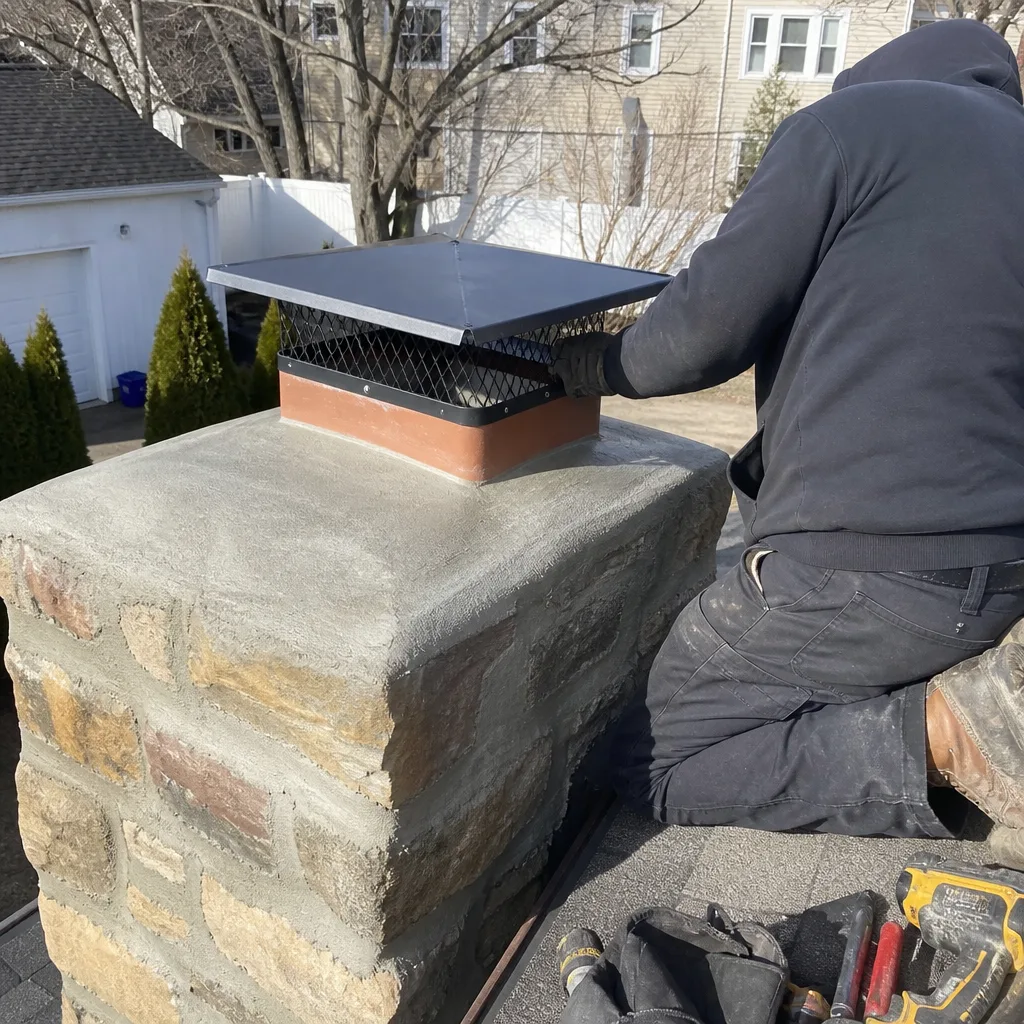 After
After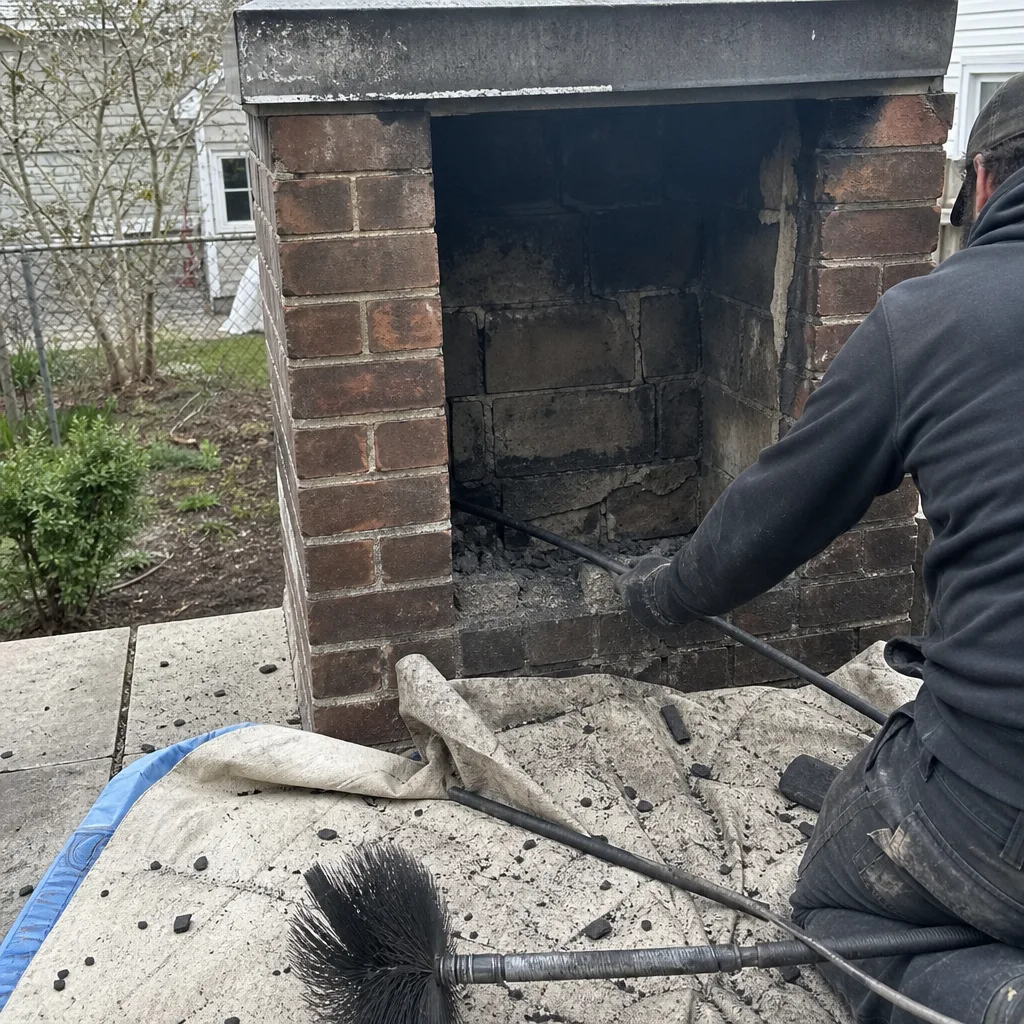 Before
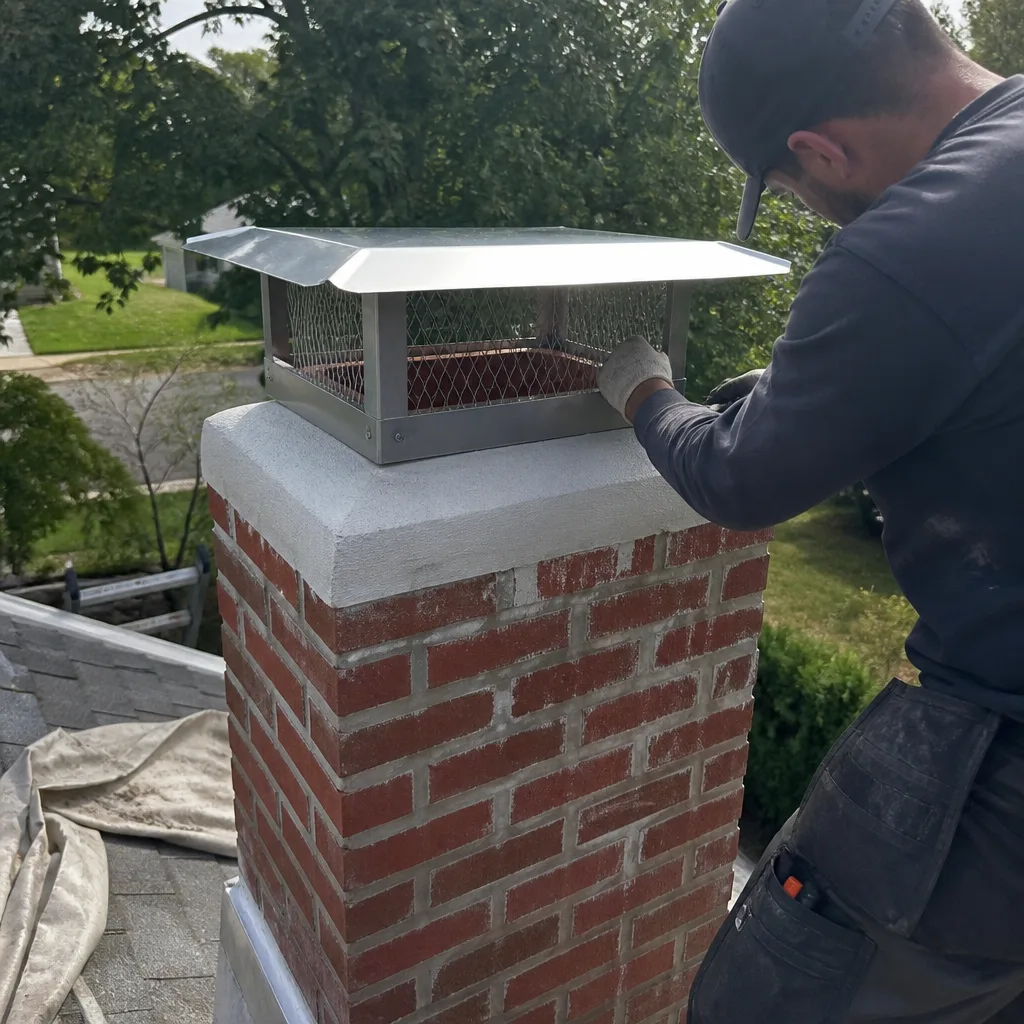 After
AfterChimney Cleaning Permits, Codes & Inspections in NY: What You Need to Know
A relining job done without a Nassau County permit isn’t just a code violation - it’s an undisclosed defect that can derail a home sale years later when the next buyer’s inspector pulls the permit history. The contractor moves on; you’re the one explaining it at the closing table. In Rockville Centre and across New York State, the line between routine chimney maintenance and permit-triggering repair work is sharper than most homeowners realize, and crossing it without paperwork creates liability that follows the deed, not the contractor who cut the corner. Here’s what we’ve learned in 42 years of documenting chimney conditions and walking homeowners through the actual permit process.
Quick Answer
Chimney cleaning and sweeping in New York does not require a permit - it’s classified as routine maintenance. However, repairs that cleaning frequently uncovers, including chimney relining, firebox reconstruction, structural rebuilding, and flue modifications, require permits under New York State and Nassau County building codes. Unpermitted work can void your homeowner’s insurance coverage for fire loss and create disclosure obligations that complicate future home sales.
Table of Contents
- What Chimney Work Requires Permits in New York?
- Maintenance vs. Repair: Where the Line Is Drawn
- How Nassau County’s Permit Process Actually Works
- NFPA 211 Standards and What Inspectors Check
- The Insurance Clause Most Homeowners Never Read
- Discovering Unpermitted Work from a Previous Owner
- Common Mistakes to Avoid
- When to Call a Professional
- Frequently Asked Questions
What Chimney Work Requires Permits in New York?
New York State leaves most building code enforcement to counties and municipalities, but the framework is consistent: permits are required for work that alters the structure, changes the fuel type, or modifies the flue system’s rated capacity. In Nassau County, where Rockville Centre sits, the Building Department applies these rules with specific attention to chimney systems because of our dense housing stock and the fire history of older wood-frame construction.
Here are the chimney work categories that trigger permit requirements in New York:
- Chimney relining or liner replacement - Installing a new stainless steel liner, cast-in-place system, or thermocrete application changes the flue’s internal dimensions and rated BTU capacity. This requires a permit and inspection.
- Firebox reconstruction - Rebuilding the firebox with new refractory panels or hand-laid firebrick alters the combustion chamber. Permits are required.
- Structural chimney repair - Rebuilding more than one-third of the chimney structure, adding support below the hearth, or modifying the chimney’s height or exterior dimensions.
- Flue modifications - Changing the flue diameter, adding a second appliance to a shared flue, or converting from one fuel type to another (wood to gas, oil to pellet).
- Chimney removal or significant height reduction - Any work that changes the chimney’s structural load or roof penetration requires engineering review.
- New chimney construction - Complete builds, including factory-built chimney installations for wood stoves or inserts.
What does not require a permit? Routine sweeping, cap and crown sealing with non-structural materials, damper repair or replacement of like-for-like components, and minor tuckpointing of mortar joints that does not exceed 10% of the total masonry surface. In our Rockville Centre work, we see confusion here constantly. A homeowner hires a sweep for “just a cleaning,” we find a deteriorated clay liner with gaps between the flue tiles, and suddenly we’re discussing whether the proposed chimney repair in Rockville Centre needs to pause for permit paperwork.
The permit application in Nassau County requires a detailed scope of work, manufacturer specifications for liner materials (we use DuraFlex and Olympia Chimney specifications regularly), and often a diagram of the flue configuration. Fees run based on the project valuation, with most chimney relining permits falling in the $150-$400 range before inspection fees. The timeline from application to approved permit is typically 5-10 business days for standard residential work, though complex jobs involving structural modification can stretch to three weeks.
Maintenance vs. Repair: Where the Line Is Drawn
The distinction between maintenance and repair matters because it determines whether you need a permit, whether your insurance covers the result, and whether a future home inspector will flag the work. New York building codes follow the International Residential Code with state amendments, and the IRC’s dividing line is functional: maintenance preserves the existing system’s design and capacity; repair or replacement changes it.
Here’s how this plays out in practice for Rockville Centre homeowners:
- Maintenance (no permit): Annual sweeping to remove creosote deposits; applying water repellent to exterior masonry; replacing a rusted chimney cap with identical dimensions; sealing minor crown cracks with CrownSeal or similar flexible sealant; adjusting or replacing a throat damper with same-size unit.
- Repair (permit required): Installing a new liner because the original clay tiles are cracked or missing; rebuilding a firebox where refractory panels have buckled from heat; repointing mortar joints that exceed 10% of total chimney surface area; replacing a damaged chimney crown with new concrete construction; converting a wood-burning fireplace to gas insert with new venting.
The gray zone is where homeowners get caught. A crown with hairline cracks can be sealed without permit. A crown with spalling concrete, exposed rebar, and water intrusion into the flue requires replacement - and that replacement needs a permit because it involves forming and pouring new concrete that alters the chimney’s water-shedding design. In our chimney cleaning and sweep in Rockville Centre appointments, we document this distinction with photos so the homeowner sees exactly which side of the line their chimney sits on.
Another common gray zone: damper replacement. A throat damper swapped for identical size and function - no permit. Top-sealing damper installation that changes the flue’s termination and draft characteristics - permit required. The HeatShield cerfractory resurfacing system we use for firebox repair occupies its own category: when applied below a certain thickness to restore surface integrity, it’s often classified as restoration rather than reconstruction, but each Nassau County inspector interprets this slightly differently. We always confirm before work begins.
The practical test we apply: if the work requires us to specify a manufacturer’s model number and BTU rating for the finished system, it almost certainly needs a permit. Maintenance doesn’t change ratings; repairs do.
How Nassau County’s Permit Process Actually Works
Nassau County’s building department processes chimney permits through its Division of Building Standards, with inspections performed by county-employed inspectors or authorized third-party agencies. For Rockville Centre homeowners, the process is straightforward but not fast, and cutting corners is detectable because the county maintains permit records indefinitely.
Here’s the actual sequence:
- Application submission - The contractor or homeowner submits a permit application with scope of work, contractor license and insurance documentation, and manufacturer cut sheets for all materials. We typically handle this for our clients.
- Plan review - For standard chimney relining, this is administrative. For structural work or fuel conversions, a plans examiner reviews the submission, which adds 5-15 business days.
- Permit issuance - Upon approval, the permit is posted at the job site and work may begin. The permit includes inspection scheduling requirements.
- Rough inspection - For liner installations, this occurs after the liner is dropped but before final connections, so the inspector can verify proper sizing, securement, and clearance to combustibles.
- Final inspection - After all work is complete, the inspector verifies the installation matches the approved scope, tests draft and spillage where applicable, and signs off.
What inspectors actually check matters. For liner installations, they verify the liner is continuous from appliance to termination with no joints in concealed spaces, that it’s properly sized per the appliance’s input rating, and that clearance to combustibles meets NFPA 211 standards - typically 1/2 inch for listed solid-pack insulated liners, 2 inches for air-insulated systems in masonry chimneys. They check that the liner is secured at top and bottom, that the termination cap is appropriate for the fuel type, and that any required insulation is installed per manufacturer instructions.
For firebox reconstruction, inspectors examine refractory material thickness, joint construction, and hearth extension dimensions. The minimum 16-inch hearth extension in front of a fireplace opening and 8 inches to each side is verified with a tape measure. In older Rockville Centre homes, we frequently find original hearths that don’t meet current standards; bringing them into compliance during reconstruction is required, not optional.
Timeline reality: a straightforward relining permit takes 5-10 business days for approval, with inspections scheduled 2-5 days after request. A complete firebox and liner project can stretch to four weeks from application to final sign-off. The permit fee structure starts at approximately $150 for work valued under $5,000, scaling to $400+ for larger projects. Failed inspections require correction and re-inspection, typically with no additional fee for the first re-inspection but charges for subsequent failures.
Here’s what the process costs in practice for common Rockville Centre chimney projects:
| Project Type | Permit Fee Range | Typical Timeline | Inspections Required |
|---|---|---|---|
| Stainless steel liner replacement | $150-$250 | 7-14 days total | Rough + Final |
| Firebox reconstruction with liner | $250-$400 | 14-21 days total | Rough + Final |
| Chimney rebuild (partial) | $300-$500 | 21-35 days total | Foundation, Framing, Final |
| Fuel conversion (wood to gas) | $200-$350 | 14-28 days total | Rough + Final + Gas test |
We build these timelines into our project scheduling so homeowners aren’t caught waiting for heat in January. The Hearthstone Chimney Co. home page lists current scheduling availability, though winter demand in Rockville Centre always stretches lead times.
NFPA 211 Standards and What Inspectors Check
The National Fire Protection Association’s Standard for Chimneys, Fireplaces, Vents, and Solid Fuel-Burning Appliances is incorporated by reference into New York State building codes and enforced directly by Nassau County inspectors. NFPA 211 isn’t a suggestion - it’s the technical standard that determines whether your chimney system is code-compliant, and it’s what insurance adjusters cite when evaluating fire claims.
For New York residential chimneys, these are the NFPA 211 requirements that matter most:
- Liner integrity: The chimney flue must be lined with a material appropriate for the appliance and fuel type, with no gaps, cracks, or missing sections that allow combustion gases to enter surrounding masonry or living spaces. Clay tile liners with cracked or missing tiles must be repaired or replaced.
- Clearance to combustibles: The minimum distance between the chimney liner or masonry and any combustible building material must be maintained. For masonry chimneys with unlisted liners, this is typically 2 inches. For listed solid-pack insulated liners like DuraFlex, it’s 1/2 inch or per listing.
- Proper sizing: The liner must be sized to match the appliance’s input rating and draft requirements. An oversized liner for a modern, efficient appliance causes condensation and creosote buildup; an undersized liner restricts draft and risks spillage.
- Continuous construction: The liner must be continuous from the appliance outlet to the chimney termination, with no joints in concealed spaces. Offset connections must be accessible for inspection.
- Termination height: The chimney must terminate at least 3 feet above the roof penetration and 2 feet higher than any portion of the building within 10 feet.
- Cap and spark arrestor: The termination must be equipped with a cap to prevent water and animal entry, with spark arrestor mesh where required by local ordinance.
In Rockville Centre’s climate, the liner integrity requirement is particularly consequential. Our freeze-thaw cycles accelerate deterioration of clay tile liners. Water enters through cracked crowns or deteriorated mortar, freezes, expands, and opens gaps between tiles. When we perform fireplace services in Rockville Centre, we document these conditions with camera inspection footage that shows the homeowner exactly what NFPA 211 requires and why their current system doesn’t meet it.
The clearance to combustibles standard is where unpermitted work most often fails. We’ve opened chimneys in Rockville Centre homes where a handyman or unqualified sweep installed a liner with zero clearance to wooden framing, or where someone who missed chimney cleaning warning signs poured loose insulation that settled and left gaps. These installations pass casual observation but fail under inspection, and they create the exact fire conditions NFPA 211 exists to prevent.
Insurance companies know this. After a chimney fire, the adjuster’s first question is often whether the system was installed per NFPA 211 and whether permits were pulled. The second question is whether the installation was performed by a qualified professional. The answers determine whether your claim is paid, denied, or litigated.
The Insurance Clause Most Homeowners Never Read
Every homeowner’s insurance policy contains a version of the same clause: the insured must maintain the property in compliance with applicable building codes, and material misrepresentation of the property’s condition voids coverage. The language varies by carrier, but the effect is consistent. Unpermitted chimney work is a code violation by definition, and failing to disclose it when applying for or renewing coverage can constitute material misrepresentation.
Here’s what this means in practice after a fire loss:
If your chimney liner was installed without permit and inspection, and a fire originates in or spreads through the chimney system, your carrier can deny the claim on two independent grounds. First, the unpermitted work violates the policy’s compliance-with-codes condition. Second, if you knew or should have known about the unpermitted work and didn’t disclose it, the carrier can rescind the policy ab initio - treat it as if it never existed - and return your premiums rather than pay your claim.
The “should have known” standard is where homeowners get surprised. If you purchased the home with an existing chimney system and never verified permits, a court may find you had constructive knowledge of the defect. If you had the chimney serviced by a sweep who noted the unpermitted liner in their report, your actual knowledge is documented. In either case, the carrier’s denial has legal support.
The liability follows the deed, not the contractor. The sweep or installer who performed unpermitted work may be long gone - dissolved, moved, uninsured. The homeowner who owns the property at the time of loss bears the insurance consequences. We’ve seen this in Rockville Centre specifically: a homeowner on Webster Avenue discovered during a pre-sale inspection that the previous owner’s 2018 relining had no permit. The current owner faced a $3,200 permit compliance cost and a threatened claim denial when a minor flue fire occurred the following winter.
What to check on your own policy:
- Read the “Duties After Loss” section for code compliance requirements
- Review the “Concealment or Fraud” provision for misrepresentation definitions
- Check whether your policy includes “ordinance or law” coverage, which can pay for code-upgrade costs after a covered loss - but only if the original work was permitted
- Verify that your carrier doesn’t exclude “work performed without required permits” specifically
When we document a chimney condition and recommend relining, we explain the permit requirement and offer to handle the application. The cost is built into our upfront pricing. The alternative - skipping the permit to save $200 - can cost your entire home’s replacement value if a fire occurs and the carrier denies coverage.
Discovering Unpermitted Work from a Previous Owner
This is the scenario that generates the most anxious calls to our Rockville Centre office. A homeowner is selling, or refinancing, or simply being responsible and having the chimney inspected before burning season. The camera inspection reveals a stainless steel liner that doesn’t match any permit on file with Nassau County. Now what?
First, verify the permit status definitively. Nassau County maintains permit records searchable by property address, though older records may require an in-person request at the Mineola office. We perform this search for clients as part of our inspection documentation. If no permit exists, the work is unpermitted regardless of what the previous owner claimed or what paperwork they provided.
Your disclosure obligations depend on timing and context. If you’re selling the home, New York’s Property Condition Disclosure Act requires disclosure of known code violations. An unpermitted chimney liner qualifies. Failing to disclose exposes you to post-sale liability; the buyer can sue for the cost of remediation plus damages. We’ve seen sale prices renegotiated by $5,000-$15,000 when unpermitted chimney work surfaces during buyer inspection.
If you’re not selling but simply maintaining the home, you have no immediate legal obligation to remediate, but your insurance coverage remains at risk. The practical question is whether the installation is code-compliant despite lacking permit, or whether it’s both unpermitted and defective.
The remediation path has three branches:
- Best case: The installation is technically sound, properly sized, and meets NFPA 211 standards. You apply for a retroactive permit, pay any enhanced fees (typically 1.5x the standard permit cost), and schedule inspection. If the inspector can verify compliance without disassembly - sometimes possible with camera documentation and accessible connections - you receive approval.
- Common case: The installation has deficiencies that would have failed original inspection - improper sizing, inadequate clearance, missing insulation, or non-continuous construction. The liner must be modified or replaced, with new permit and inspection. Cost range in Rockville Centre: $2,800-$6,500 depending on chimney height, access, and required materials.
- Worst case: The installation is dangerous - zero clearance to combustibles, improper fuel-type liner, or structural compromise. Immediate discontinuation of appliance use, full replacement required. Cost range: $4,500-$12,000 for complete relining with professional-grade materials, plus any necessary masonry repair.
We use DuraFlex and Olympia Chimney stainless steel liners for replacement work, with sizing and installation per manufacturer specifications and NFPA 211. The Gelco cap and flashing systems we install are specified in our permit applications so inspectors have documentation before they arrive.
The previous owner’s contractor is rarely a practical source of recovery. Statutes of limitations on construction defects run from discovery or from reasonable discovery time, and many unpermitted installations are performed by unlicensed operators who carry no insurance or have dissolved. Your recourse is against the seller if you purchased recently and can prove they knew of the unpermitted work, or against your own title insurance if the policy covers code violations (most standard policies don’t, but enhanced coverage sometimes does).
The cheapest path is always prevention: verify permits before you buy, and demand permit documentation for any chimney work performed during your ownership. We provide permit copies and inspection sign-offs with every job, stored permanently in our client files.
Common Mistakes to Avoid
- Hiring based on price alone without permit verification. The lowest bid often omits permit costs entirely. Ask directly: “Will you pull the required permit, and is that cost included?” Get the answer in writing.
- Assuming a “licensed” sweep is licensed for construction. New York has no state chimney sweep license. A business license or home improvement license doesn’t authorize permit application for structural or liner work. Verify the contractor holds appropriate Nassau County licensing for the specific work category.
- Accepting “the homeowner can pull the permit” as a solution. Some contractors push permit responsibility to homeowners to avoid their own licensing deficiencies. If the contractor won’t pull the permit, they likely can’t - and their work won’t pass inspection.
- Ignoring permit requirements for “like-for-like” replacements that aren’t. Replacing a damaged liner with the same material but different diameter, or installing a listed liner where none existed before, changes the system’s rating and requires permit. The “like-for-like” exemption applies only to identical components with identical specifications.
- Failing to request final inspection documentation. A permit without final sign-off is incomplete. We’ve encountered Rockville Centre homes where permits were pulled but never closed because the contractor abandoned the job or failed inspection and didn’t correct. Unclosed permits create title issues.
- Assuming old work is “grandfathered.” Chimney systems are not grandfathered against current safety standards. When work is performed, it must meet current code. Previous unpermitted work doesn’t become legal with age.
- Not checking permit history before purchase. A $50 permit search before closing can reveal $10,000 in undisclosed defects. In Rockville Centre’s competitive market, buyers waive inspections; don’t waive permit verification.
When to Call a Professional
Call a qualified chimney professional when your annual inspection reveals liner damage, when you’re purchasing a home and can’t verify chimney permits, when you’re converting fuel types or installing a new appliance, or when you’re selling and need to confirm compliance before listing - our complete guide to chimney cleaning in Rockville Centre covers what to expect. Any work that crosses from maintenance into repair requires expertise that documents conditions, specifies proper materials, and navigates permit requirements correctly.
Hearthstone Chimney Co. offers free estimates in Rockville Centre - call (631) 498-8835. We’ll inspect your chimney with a Level-2 camera examination, provide photos you can see and a plain-English verdict, and if work is needed, we’ll specify exactly what permits are required, what they’ll cost, and how long they’ll take. No surprises on the bill. In writing, no arguing. Done right - and we stand behind it.
Frequently Asked Questions
No. Chimney cleaning and sweeping are classified as routine maintenance under New York State and Nassau County codes, and no permit is required for removal of creosote, debris, or obstructions. Call (631) 498-8835 for an exact quote - estimates are free.
Permit fees for standard stainless steel liner replacement in Nassau County typically range from $150 to $250, plus inspection fees. Firebox reconstruction or structural work runs $250 to $500. These costs are separate from the installation labor and materials. Call (631) 498-8835 for an exact quote - estimates are free.
NFPA 211 recommends annual inspection, with cleaning frequency determined by use and fuel type. Wood-burning systems in Rockville Centre’s climate typically need annual sweeping due to our cold winters and the creosote accumulation from frequent fires. Gas systems may need less frequent cleaning but still require annual inspection for proper venting and moisture damage. Call (631) 498-8835 for an exact quote - estimates are free.
Clay tile liners can last decades if intact, but they deteriorate from thermal cycling and moisture intrusion. If camera inspection reveals cracked, missing, or gap-separated tiles, NFPA 211 requires repair or replacement. We show you the photos and explain whether the condition is monitorable or requires immediate action. Some conditions can be addressed with HeatShield cerfractory resurfacing rather than full liner replacement. Call (631) 498-8835 for an exact quote - estimates are free.
Uncleaned chimneys accumulate creosote, a combustible deposit that ignites at approximately 451°F. Chimney fires damage liners, spread to framing through cracks, and can destroy homes. Blocked or deteriorated flues also vent carbon monoxide into living spaces. These are genuine hazards, not scare tactics. The remedy is straightforward: annual inspection and cleaning as indicated. Call (631) 498-8835 for an exact quote - estimates are free.
Nassau County provides limited online permit lookup, but older records and detailed documentation often require in-person request at the Building Standards office in Mineola. We perform permit history searches as part of our pre-purchase and pre-sale inspection services for Rockville Centre properties. Call (631) 498-8835 for an exact quote - estimates are free.
The Bottom Line
Chimney cleaning doesn’t need a permit, but the repairs it reveals frequently do. In New York, that distinction determines your insurance coverage, your home sale prospects, and your family’s safety. Nassau County’s permit process is navigable but not optional, and unpermitted work creates liability that outlasts the contractor who performed it. Document everything, verify permits before you buy, and work with professionals who handle the paperwork as part of the job. For more guides & resources on protecting your home, see our blog. A square deal means no surprises - not on the bill, not at the inspection, not at the closing table.
Written by Russell Haines, Owner at Hearthstone Chimney Co., serving Rockville Centre since 2014.